Radically Engaged Buddhist Studies
A year‑long course in Buddhist teachings and radical political thought
January 15 - December 17, 2026
Thursdays, 12:00-1:30pm EST
with Adriana DiFazio and guest teachers
Explore all three schools of Buddhism in conversation with radical political theory and discover what becomes possible when both traditions learn from the other
The course engaged Buddhism needs now
Deepen your dharma and radical political education together
We live in violent and uncertain times. Genocide, fascism, and systemic oppression have rattled our sense of basic goodness and revealed the limits of liberal, depoliticized approaches to Buddhism. Many of us recognize that true liberation requires confronting both the internal and structural conditions of suffering.
We are at a spiritual and political juncture that demands more. If engaged Buddhism is to meet this moment, it must take an explicitly radical turn—one capable of drawing out the dharma’s liberatory wisdom amidst the world’s greed and delusion.
This year-long, discussion-based colloquium brings primary texts from Marx and Gramsci to Buddhist scriptures and asks: Where do these traditions expose each other’s blind spots? Where do they fall short under racial capitalism, empire, and state violence? How might each be deepened, sharpened, or transformed through an encounter with the other?
This course is for practitioners, activists, and thinkers who want a space for rigorous, embodied study and who are committed to exploring what liberation might require from both Buddhism and radical politics today.
Course Schedule
Course 1
Early Buddhism and Post-Capitalist Thought
Explore the intersections of early Buddhist (Theravada) teachings and Marxist / post-capitalist thought. We’ll dive into Buddhist analyses of suffering, craving, and liberation alongside critical theories of alienation, labor, gender, and ideology.
January–March 2026
Six Thursdays | 12:00-1:30pm ET
Jan 15, Jan 22, Feb 5, Feb 19, Mar 5, Mar 19
Audit students receive all class material, readings, and replays.
Course 2
Mahayana Buddhism and Decolonial Thought
Bring Mahayana Buddhist teachings into dialogue with decolonial and postcolonial theory, examining how coloniality shapes knowledge, power, identity, and being.
April–June 2026
Six Thursdays | 12:00-1:30pm ET
Apr 9, Apr 16, April 30, May 14, May 28, Jun 11
Audit students receive all class material, readings, and replays.
Course 3
Vajrayana Buddhism and Abolitionist Practice
Examine the dialogue between contemporary abolitionist theory and Vajrayana Buddhist practice, focusing on transformation, radical imagining, and collective action.
October–December 2026
Six Thursdays | 12:00-1:30pm ET
Oct 8, Oct 15, Oct 29, Nov 12, Dec 3, Dec 17
Registration
Year-Long Enrollment:
$750 - Access
$875 - Sustainer
$1,025 - Solidarity
Year-long enrollment is now closed. However, if you’d like to audit Course 1 and 2 materials and join Course 3 live sessions, please fill out the form above.
Individual Course Enrollment:
$250 — Access
$325 — Sustainer
$425 — Solidarity
Please choose the sliding scale tier that feels generous and sustainable for you. All above tiers are listed in USD.
I recommend this resource to distinguish your appropriate rate. The Sustainer rate ($325) allows me to meet my personal needs and the needs of others who rely on me. The Solidarity rate allows me to work with others at the Access rates.
No one will be turned away for lack of funds. If you are unable to afford the Access tier, please input what you are able to offer on one of the above registration forms. Payment plans are also available—reach out to ad@adrianadifazio.com for options.
What Participants Are Saying
“I’ve been auditing the course from afar and have so appreciated the trajectory and the learning so far. The guiding questions and the deep rigor of analysis and enquiry here have been revelatory, inspiring, and radically engaging—counter hegemonic and integrative!”
“Such a wonderful set of classes. Marrying radical political analysis with Buddhism is unfortunately very rare in all of the sanghas I've been a part of over the years, so I'm grateful to Adriana for bringing us together to do just that! Expertly led, with sincerity and curiosity. 10/10!”
“Among everything, the cohort was transformative. The group, convened by a shared drive for evolution and learning, made all of this come profoundly alive. The wisdom sharing was electric, and I loved hearing how everyone connected the material to our current reality and lived experience.”
“I feel a sense of expansiveness of ideas and what is possible in creating change. And considering that along with my Buddhist practices, specifically thinking of the Bodhisattva path, feels like liberation is possible. Our readings and discussions have helped me to better understand life is not a binary, which conceptually has made sense to me, but this feels more like a material understanding.”
“I don’t think it’s hyperbolic to say that I’d be a different person without this course. There are questions that the readings forced me to ask myself, and questions that other participants raised, that fostered a real self-reflection and interrogation.”
“The readings (and specifically the pairings of readings) were excellent; Adriana's clear and cogent lectures; the conversations/interviews with guest presenters; generative questions for break-out rooms; and frankly the caliber of participants. I really appreciated classmates' deep engagement with and candid discussion of the material and our wrestling together with applications for our political and spiritual lives. The whole course felt very genuine, from the heart, to the essence, and profoundly honest.”
Class Structure
1.Preparation
We’ll have two weeks between each class to read the assigned texts drawn from Buddhist teachings and radical political theory. All reading material will be provided as PDFs.
2. Opening practice
Each session begins with a short meditation to ground.
3. Facilitated framing
Brief contextual remarks will be offered to surface key themes and tensions in the texts we read.
4. Colloquium discussion
We’ll dive into participant-led discussion and analysis of the teachings and theory.
5. Integration
We’ll have closing reflections to connect the study to lived practice, political commitment, and engaged Buddhist action.
By the end of our time together you'll have:
Developed a grounded analysis of our overlapping crises and why both individual and structural transformation are necessary
Deepened your political education in dialogue with a Buddhist worldview, clarifying how the dharma informs your activism
Connected with fellow meditators and Buddhists seeking an engaged Buddhism able to speak directly to genocide, capitalism, and imperialism
Formed your own analyses of how Marxist, decolonial, and abolitionist theory illuminate the limits of Buddhism—and how Buddhist teachings, in turn, challenge these frameworks
Cultivated emotional and spiritual agility to bring the dharma into direct relationship with the unfolding crises of our time
Practiced holding the grief, disorientation, and tenderness that arise through political radicalization and the work of hospicing modernity
Guest Teachers
Guest teachers will join us for select sessions, bringing additional perspectives from their Buddhist practice, scholarship, and lived experience.
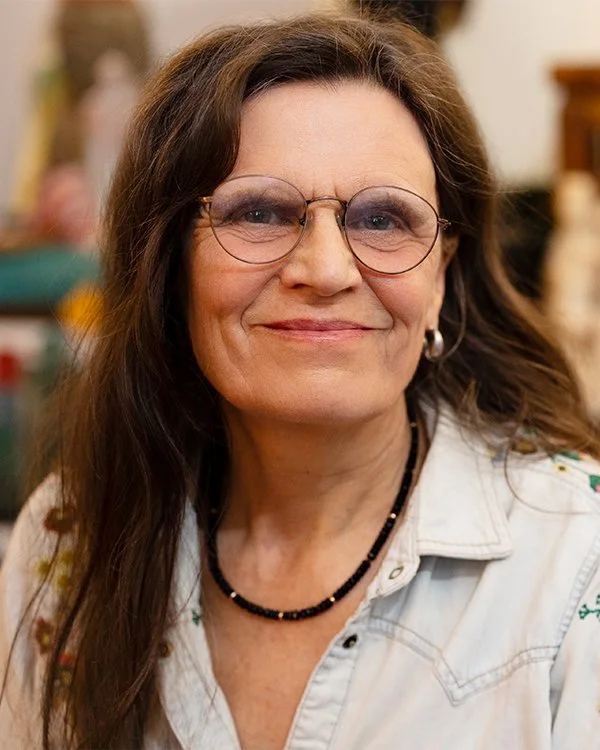
Thanissara — Buddhist teacher and writer, known for her work on feminist dharma perspectives and socially engaged practice
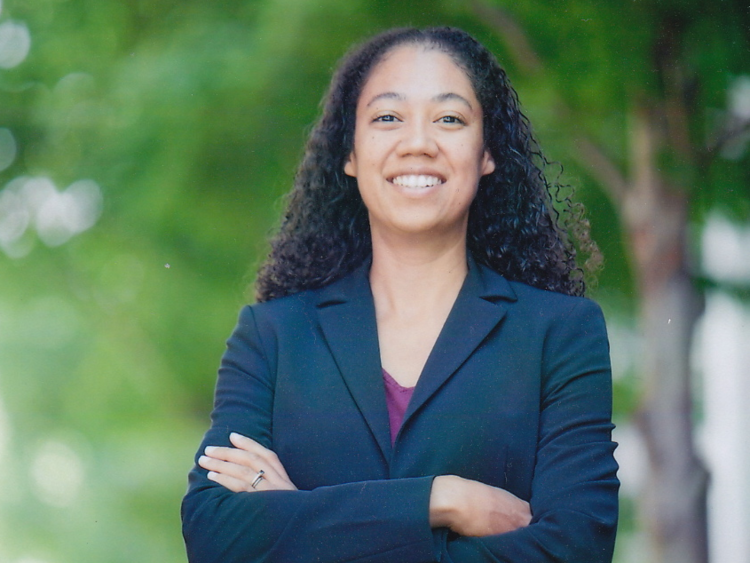
Dr. Rima Vesely-Flad — scholar of religion, race, and Buddhism, whose work centers Black studies and liberationist frameworks


Dr. James Beirne — scholar of social and political thought whose work brings together queer feminist methods, social justice commitments, and historical analysis of Ireland and the colonial world
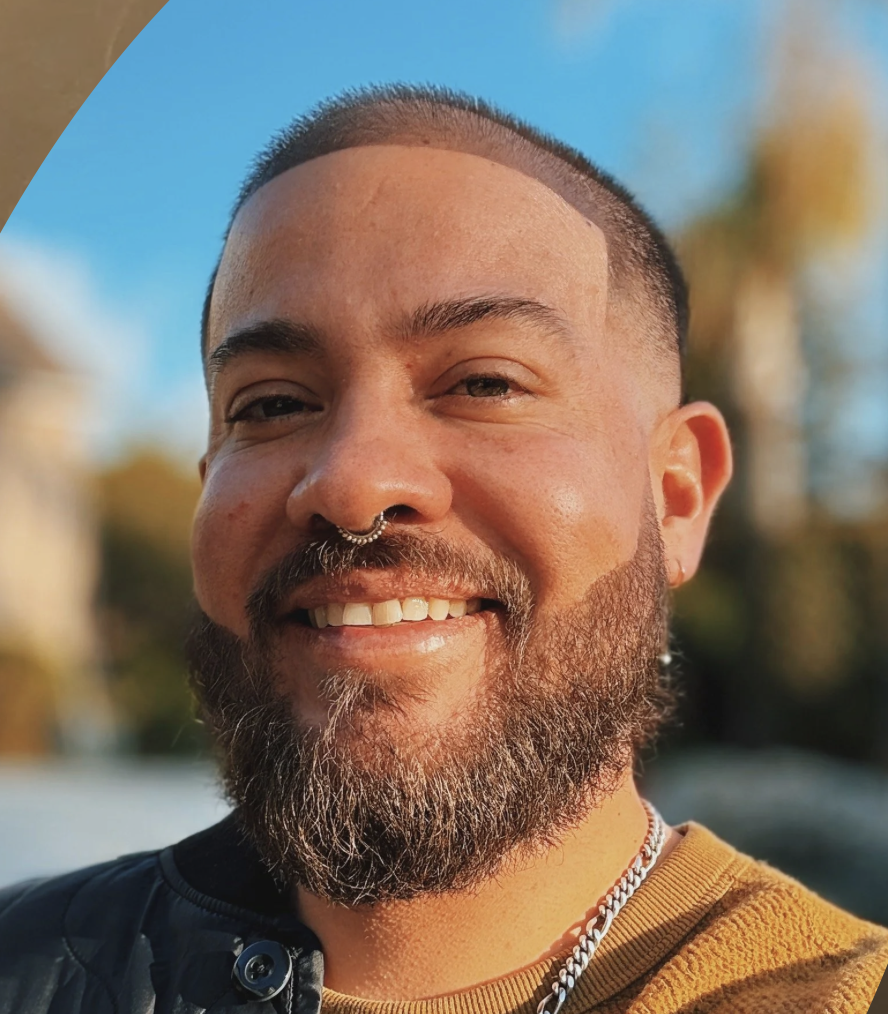
Andrés González — two-spirit Mestizo practitioner of curanderismo, Dharma teacher, community mental health clinician, writer, and song-carrier
More guest teachers to be announced!
Facilitator
Led by Adriana DiFazio

Hey! I’m Adriana 👋
I am a Buddhist meditation teacher, scholar, chaplain, and parent.
I believe Buddhism and spirituality have a role to play in bringing about collective liberation. I also believe Buddhism will lose its relevance and meaning if it’s unable to speak explicitly to the crises of our times.
I believe this tension is not inherent to the dharma itself, but rather reflects the ways liberalism and modernity have shaped how Buddhism is translated and practiced in the West. I see one fundamental path forward as engaging deeply with traditions like Marxism, decolonial/post-colonial thought, and abolitionist frameworks to develop a more rigorous analysis of power and oppression. On the other hand, I believe Buddhist practice and teachings can keep our analyses rooted in basic goodness, soften the ego, and open the heart-mind needed for the relational work required amid social upheaval and systemic collapse.
My deep aspiration and hope is that this year-long course will give us the opportunity to collectively iterate a more radically engaged Buddhism, and allow that work to inform our practice.
May we all be free from the roots of suffering and enjoy true, profound, complete freedom.
In love and solidarity,
Adriana
Have more questions?
-
Yes! Each course will have separate enrollment if you prefer not to join for the entire year.
-
Yes! All sessions are recorded and posted within 48 hours of the live session. Recordings remain accessible for 90 days after each course ends.
-
Because this is a colloquium-style course, live participation is encouraged. That said, asynchronous participation is possible. A Google Classroom discussion board will be available for continued conversation between sessions.
-
Each session begins with brief introductions and a short (5-minute) meditation. I then offer a 15-20 minute framing of the texts, highlighting key themes and tensions, followed by facilitated group discussion for the remainder of the session.
-
Readings will typically be about ~100 pages per session. There are two weeks between sessions to allow time for reading and reflection.
-
Nope! I will provide all the reading materials for this course as PDFs.
-
Nope! This program is open to folks of any spiritual, religious, or secular background.
-
This course is designed for engaged Buddhists, meditators, activists, organizers, and thinkers who are interested in placing Buddhist teachings in direct conversation with radical political theory.
-
The course engages primarily with radical political traditions, including Marxist, abolitionist, decolonial, and anti-imperialist thought, alongside Buddhist teachings. While participants hold a range of views, the course is not grounded in liberal or “neutral” political frameworks.
-
Some familiarity with basic Buddhist teachings is recommended in order to engage the texts—this is not an introductory Buddhism course. If you’re looking to establish a strong foundation in core Buddhist teachings, I recommend my 1:1 mentorship program.
-
We’ll be engaging with primary texts from both Buddhist and radical political traditions. While you do not need to be a trained academic by any means, there is a shared expectation that the material will be dense and require intensive reading and reflection.
-
That’s okay! And to be expected. This course is structured as a colloquium where we can learn and grow together. The goal is not consensus, but critical engagement and dialogue.
-
Each live session includes a brief meditation, but the primary focus of the course is collective study, discussion, and reflection. This is a text-based, dialogue-driven course rather than a meditation program. If you’re looking for a meditation course, I recommend my Introduction to Buddhist Meditation Practice Course on Substack.
-
Participants will receive the syllabus at least one week before each course begins. Readings will be provided as PDFs and uploaded to Google Classroom at the end of each session.
-
This course is part of my full-time work and supports my family. I offer sliding-scale, tiered pricing to help me budget for my family’s needs. However, no one is turned away for lack of funds—please still register for the course using the above forms.